We use essential cookies to keep this site working — your cart, your accessibility settings, your preferences. We don’t use tracking or advertising cookies. Read our Cookie Policy.

Author's website
www.goldfarbpod.com
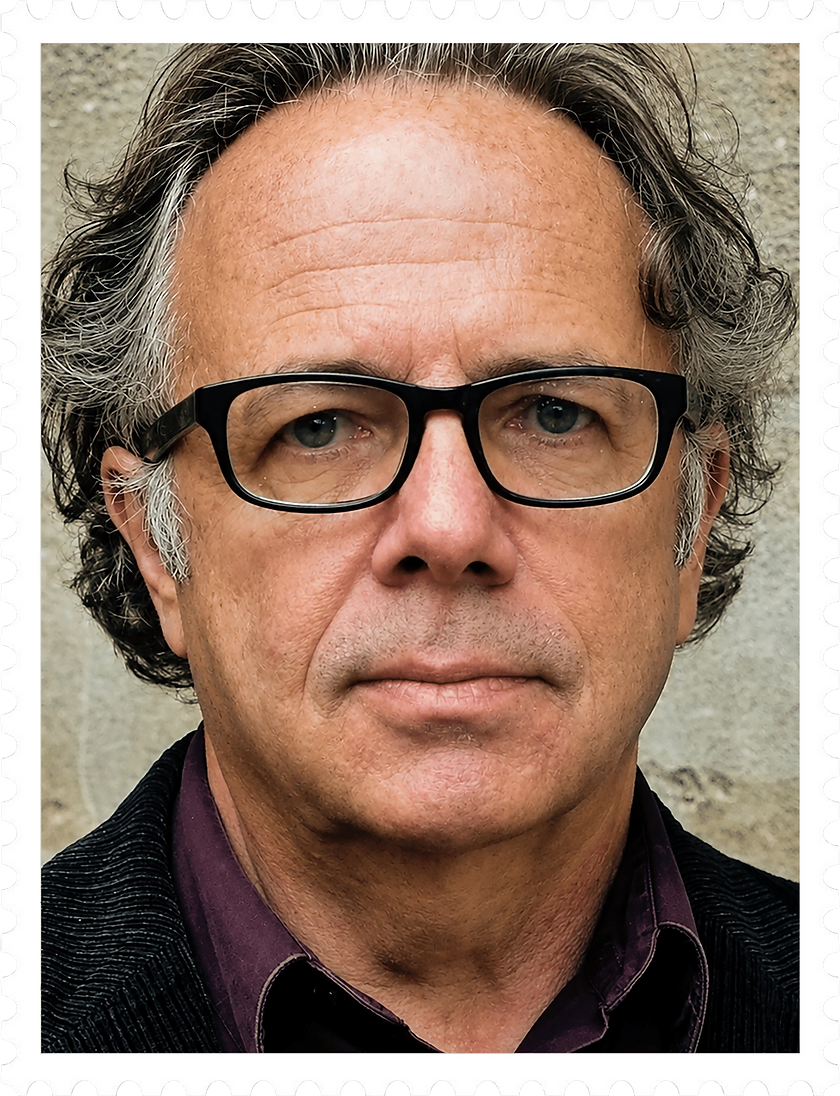
Michael Goldfarb
Michael Goldfarb is an award-winning author, documentarian and podcaster. A native New Yorker, he moved to London in 1985 and spent many years covering conflicts and attempts at conflict resolution in Northern Ireland, Bosnia and Iraq for NPR (National Public Radio) in the USA. Since 1993, the BBC has sent him back to America periodically to report on social and cultural changes in his homeland subsequent to his relocation. More recently he has been charting the rise, fall and persistence of Donald Trump in a series of radio documentaries for the BBC; on his FRDH (First Rough Draft of History) podcast (goldfarbpod.com); and at his substack, History of a Calamity (michaelgoldfarb.substack.com). His journalism has won the highest honours on both sides of the Atlantic including the DuPont-Columbia Award, the Overseas Press Club’s Lowell Thomas Award in America and the Sony Gold award in Britain. He has also been a fellow at the Joan Shorenstein Center on Press and Politics at Harvard’s John F. Kennedy School of Government.” His life as a reporter has led to his writing books. Ahmad’s War, Ahmad’s Peace: Surviving Under Saddam, Dying in the New Iraq (the forerunner to The Martyrdom of Ahmad Shawkat) followed his experiences as an unembedded reporter in Kurdistan during the first phase of Gulf War II, between March and April 2003. It was named a New York Times Notable Book of 2005.
Background
Michael Goldfarb was born in New York in 1950 and grew up in suburban Philadelphia. He attended Antioch College and ini:ally pursued a career in the theatre, working as an actor in New York. He was involved in the founding of the Pearl Theatre Company in Manhattan in 1984–85. He then made a fairly substantial career change: in 1985 he moved to London, intending to become a journalist.
His first journalism was largely arts and cultural reporting. He wrote about theatre and film for publications including The Guardian and Newsday, and also worked for the BBC. Through broadcasting he moved gradually from criticism into reporting and documentary journalism. He went on to become one of the better-known American journalists covering Britain for American public radio.
From 1990 to 1998 he worked for National Public Radio, becoming its London bureau chief from 1996 to 1998. His remit was much wider than British politics. He covered the Northern Ireland peace process, British politics and the Royal Family, as well as reporting from Bosnia and Iraq.
One of the characteristics of his journalism was that he was interested in ‘people rather than simply events’. He often built radio documentaries around an individual whose experience could illuminate a much larger political story.
His 1994 series ‘Homeward Bound’, about the American Midwest, won Britain’s Sony Award for best original writing for radio. He was the first American to win that award. He subsequently became a senior correspondent for ‘Inside Out’, the documentary programme produced by WBUR, the Boston public-radio station. His work there produced several important pieces of reporting and a collection of major awards, including the DuPont-Columbia Award, Edward R. Murrow Awards and the Overseas Press Club’s Lowell Thomas Award.
The Northern Ireland conflict and peace process were significant parts of his early career. He covered the negotiations that eventually produced the 1998 Good Friday Agreement, and his experience there gave him a particular interest in the problems of political reconciliation and the consequences of violence.
He subsequently reported from Bosnia, another conflict in which the neat categories of aggressor and victim could become complicated on the ground. His career increasingly moved towards reporting on war, political violence and religious extremism.
That culminated in his work after 11 September 2001, when he began reporting extensively on radical Islam. He travelled and reported in places including Cairo and Tehran, as well as among Muslim communities in Britain.
One of his most notable documentaries was ‘British Jihad: Inside Out’, which investigated Islamist radicalisation in Britain, including the political and religious arguments being made by young British Muslims. Rather than approaching the subject as a terrorism correspondent, he explored the underlying question of identity: what it meant to be Muslim and British, and where people believed their principal allegiance lay. He later explained that his reporting repeatedly brought him back to a fundamental question: whether a Muslim’s first allegiance should be to his country or to his faith. The documentary won the Lowell Thomas Award for Outstanding Radio Journalism.
One of the most important episodes in Goldfarb’s career was his reporting on the 2003 Iraq War. He went to Iraqi Kurdistan immediately before the American invasion, arriving on 18 March 2003, wanting to relay his observations through the experience of an Iraqi rather than primarily through American military sources. There he met Ahmad Shawkat, an Iraqi journalist who became his translator and guide.
Shawkat was an unusual and compelling figure. He was a Kurdish-speaking Iraqi from Mosul, a former academic and journalist who had suffered imprisonment and torture under Saddam Hussein. He was also deeply sceptical of both Saddam’s nationalism and the political forces that subsequently emerged in Iraq. Goldfarb’s documentary, ‘Ahmad’s War: Inside Out’, followed Shawkat’s experience of the invasion and the collapse of Saddam’s regime.
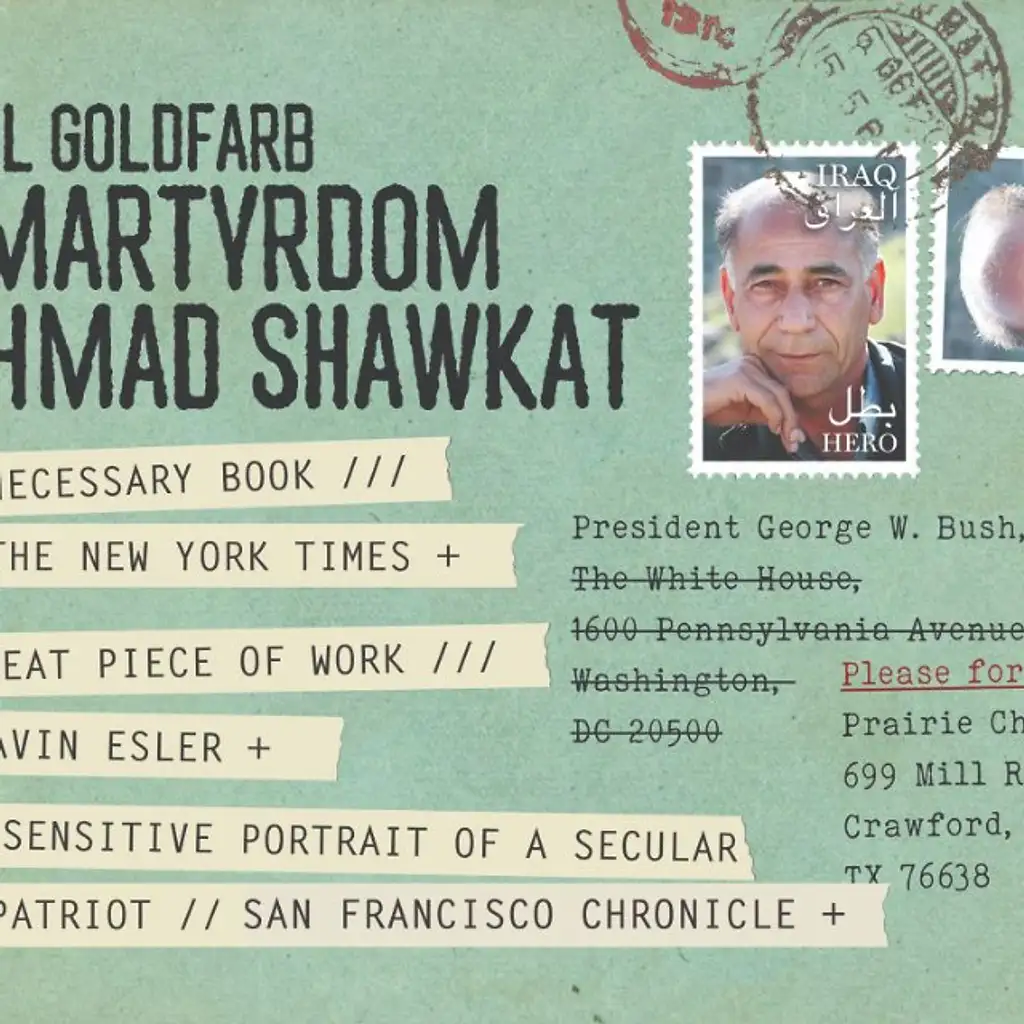
Following the broadcast, Shawkat was assassinated in Mosul in October 2003. Goldfarb subsequently wrote Ahmad’s War, Ahmad’s Peace: Surviving Under Saddam, Dying in the New Iraq, published in 2005, now republished by EnvelopeBooks as The Martyrdom of Ahmad Shawkat. The book is partly a portrait of Shawkat and partly Goldfarb’s account of Iraq’s hurried transition from dictatorship to the chaotic and violent society that followed the invasion. It was named a New York Times Notable Book of 2005. A review in the New York Review of Books argued that the book captured the profound disappointment of liberal Iraqis who had hoped that the fall of Saddam would produce a better Iraq, only to see the country descend into violence and sectarian politics.
Goldfarb’s relationship with public radio changed in the mid-2000s. He was made redundant by WBUR in 2005, after which he returned to freelance journalism. He continued producing radio documentaries for the BBC, including work for Radio 3, Radio 4, the World Service and Radio 5, and wrote for newspapers and magazines.
His byline has appeared in publications including the New York Times, Washington Post, Guardian, Observer, Politico, Newsday, Frankfurter Allgemeine Zeitung and Die Welt. He has reported from more than 20 countries on five continents. He has also been a regular contributor and commentator on British television, including ‘Dateline London’.
Emancipation, his second major book, took him in a different direction. Emancipation: How Liberating Europe’s Jews from the Ghetto Led to Revolution and Renaissance examines the transformation of European Jewish life from the late eighteenth century onwards. Rather than treating Jewish emancipation simply as the removal of legal restrictions, Goldfarb looks at the enormous social and intellectual consequences of Jews being admitted into European society.
There is a connection with his journalism: he became interested in the subject partly because his reporting on radical Islam had repeatedly confronted him with questions about religious identity, integration, citizenship and the relationship between religious and national allegiance. A Stanford Jewish Studies event described the book explicitly as emerging from his reporting on radical Islam, moving from asking questions about Muslims and identity in contemporary Europe to the much older European experience of Jewish emancipation and integration.
In 2016 Goldfarb began the FRDH — First Rough Draft of History podcast. The premise is that journalism records history as it happens, while the journalist also carries memories of earlier events that can illuminate the present. He describes the podcast as drawing on the history he has ‘reported on, written and lived’, and combines his own essays with conversations with other journalists and historians.
Author's website
www.goldfarbpod.com