We use cookies to run this site — your cart and your settings. No tracking or ads. Cookie Policy.

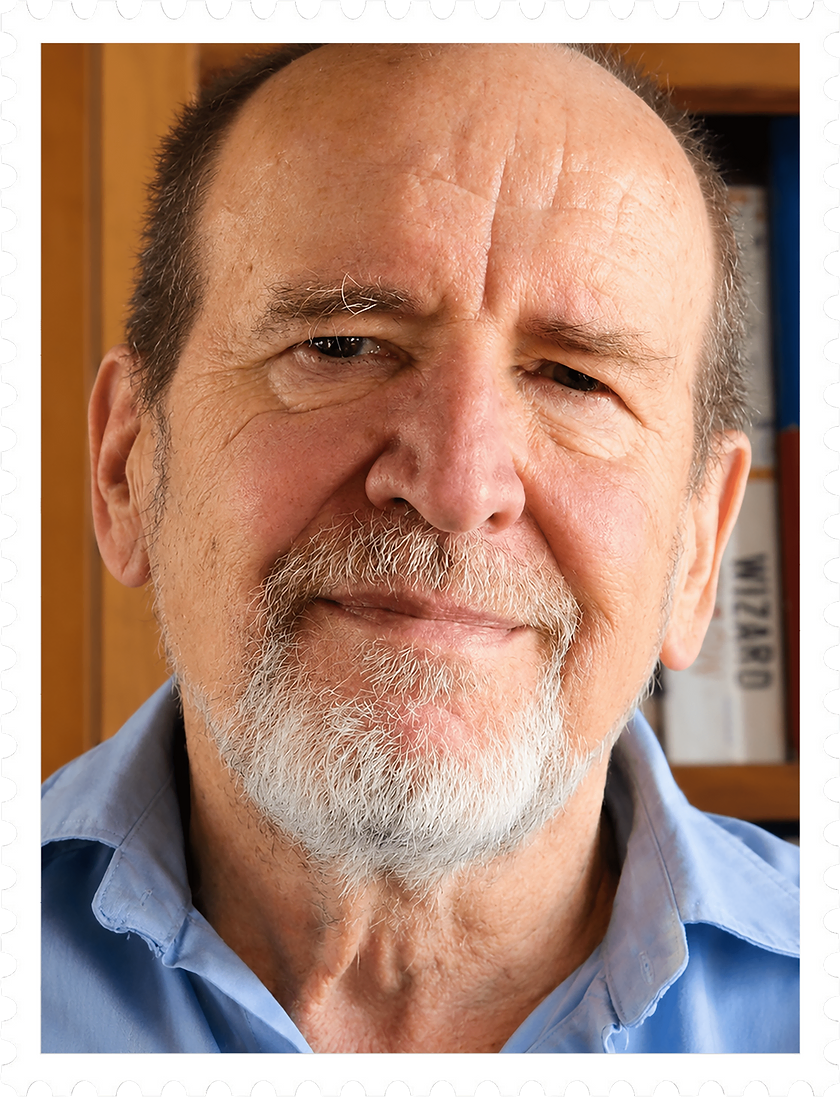
Michael Holman
Michael Holman was brought up in small-town white Rhodesia, establishing his political credentials in Salisbury (now Harare) as a University of Rhodesia student leader opposing UDI in 1965. In August 1967 he was served with a government order confining him to his hometown (Gwelo, now Gweru). Allowed to leave after a year, he completed an MSc at the University of Edinburgh, before returning to Zimbabwe to work as a journalist. He narrowly escaped arrest after refusing to accept a military call-up and after three weeks in hiding, left the country illegally. He soon returned to Africa, basing himself in Lusaka, Zambia, and writing as the Financial Times’s Africa correspondent. After moving to London he became the paper’s Africa Editor, taking early retirement in 2002 following surgery for Parkinson’s disease, but continues to visit his old beat regularly. In addition to collections of his reports, he has written three satirical novels set in the imaginary East African nation of Kuwisha.
Background
Michael Holman was born in Penzance, Cornwall, in 1945, but his parents moved to Southern Rhodesia (now Zimbabwe) when he was two. He grew up in what was then Rhodesia and studied at the University of Rhodesia and later the University of Edinburgh, where he took an MSc in politics.
His early career was politically adventurous. As a student he co-edited Black & White, a satirical magazine that was banned by the Rhodesian government in 1968. He was arrested and placed under restriction in his home town under the country’s security legislation. He subsequently went to Edinburgh.
After freelancing for British newspapers, he worked for the Financial Mail in southern Africa before joining the Financial Times in 1977. His seven years reporting from Lusaka gave him extensive first-hand experience of the region before he moved to London as Africa editor.
Holman’s perspective was unusual for a British-based Africa editor because he had actually grown up in southern Africa and had experienced the politics of colonial Rhodesia personally. That seems to have contributed to a rather sceptical attitude towards simplistic Western explanations of African problems. As editor, he coordinated the FT’s coverage from correspondents and stringers across the continent and edited the paper’s country surveys as well as writing editorials on Africa.
His writing was often sharply critical of both sides: African political elites when they behaved badly, but also Western governments, aid agencies and journalists when they treated Africa paternalistically. In a later article, for example, he argued that Britain’s relationship with Africa remained distorted by assumptions inherited from the colonial era. He was also willing to challenge conventional Western thinking about aid. In work with Greg Mills, he argued for a more limited, targeted approach to foreign aid and greater reliance on African domestic resources, investment and trade.
After showing symptoms of early-onset Parkinson’s Disease, Holman retired from the FT in 2002, but continued writing about and visiting Africa. He contributed to publications including openDemocracy, The EastAfrican and The Elephant, and remained a commentator on Zimbabwe, Kenya, South Africa and wider African politics. He also became a novelist. His books include:
Last Orders at Harrods: An African Tale (2005)
Fatboy and the Dancing Ladies (2007)
Dizzy Worms (2010)
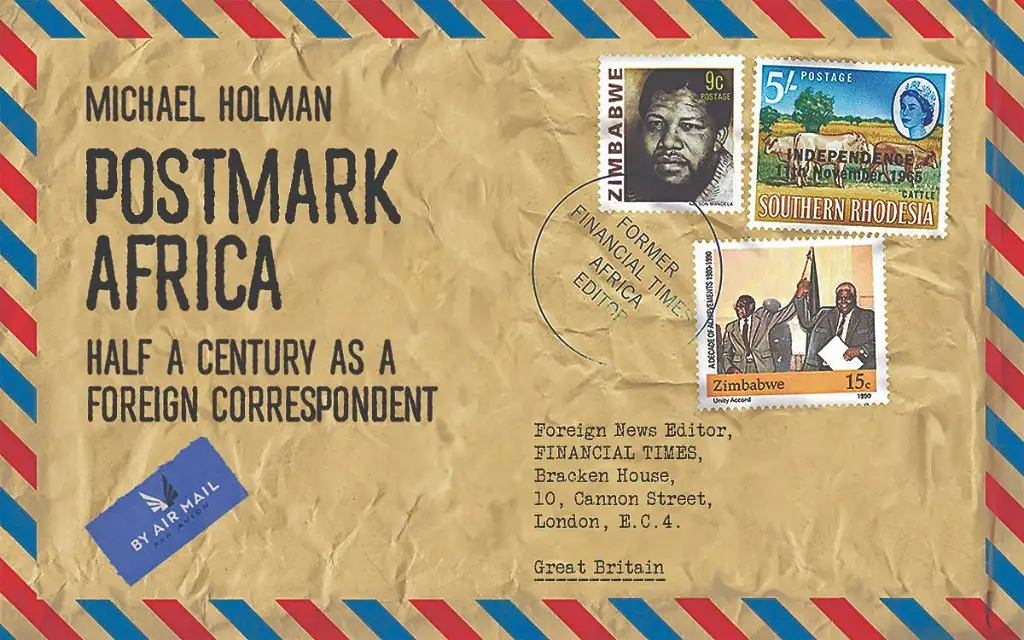
These three titles form a satirical series, set in a fictional African slum, poking fun at politicians, diplomats, foreign donors and journalists. He subsequently published Postmark Africa: Half a Century as a Foreign Correspondent, an autobiographical account of his career, now re-issued as African Expectations.
What makes Holman’s career notable is that, unlike most foreign correspondents who are parachuted into Africa, Rhodesia/Zimbabwe was his formative environment. He had opposed Ian Smith’s minority-rule government, and then spent decades observing the transition from colonial rule through independence and the post-Cold War period. This helps explain why he could be simultaneously critical of African governments and deeply suspicious of the assumptions underlying Western coverage of Africa.