We use essential cookies to keep this site working — your cart, your accessibility settings, your preferences. We don’t use tracking or advertising cookies. Read our Cookie Policy.


Robert Best
Robert Dudley Best (1892–1984) was an industrial designer best known for the Bestlite, an iconic British modernist design of the 1930s. Born into a prosperous Birmingham family, he studied at an art school in Düsseldorf before the First World War. He later wrote about his father’s business innovations, the history of early twentieth-century design and his own experiences, including recollections of F.M. Alexander.
Background
Robert Dudley Best inherited Best & Lloyd, the Birmingham lighting and engineering firm founded by his grandfather in 1840 and developed into a highly successful manufacturer by his father, R. H. Best. The company supplied lighting and fittings to prestigious clients and installations, including the Titanic and the Orient Express, major hotels and cinemas.
Best’s importance, however, extends considerably beyond the lamp with which his name is now chiefly associated. He belonged to the generation of British industrialists who encountered European modernism in the 1920s and who became convinced that industrial production could be reconciled with serious artistic and social principles, though his own position was far more sceptical. His father had expected him to enter the family business, and he was consequently sent to study industrial and interior design in Düsseldorf and Paris before the First World War. In the 1920s, during his business trips overseas, he encountered the emerging European design movement at close quarters.
The simplicity of the Bestlite represented a radical departure from the ornate lighting traditionally associated with his company. Best believed that industrial objects should be functional, economical and elegant rather than heavily decorated. His father was initially reluctant to manufacture it, but agreed to a trial production. The lamp proved successful with the Royal Air Force and motor mechanics before finding a wider audience among architects and designers. In 1931 the Architects’ Journal identified it as Britain’s first Bauhaus-inspired design.
The Bestlite is now regarded as an important landmark in British design history. Its significance lies partly in the fact that it demonstrates how the principles of continental modernism could be translated into a commercially manufactured British product without sacrificing either utility or visual refinement. The lamp has subsequently entered the permanent collections of major museums, including the Victoria and Albert Museum.
Best was also considerably more intellectually and politically engaged than the conventional image of an industrial heir might suggest. He was an early follower of F. Matthias Alexander, the Australian-born teacher of the Alexander Technique, and became interested in questions of education, personal development and social organisation. During the Second World War he was involved in the Common Wealth Party, founded in 1942 by J. B. Priestley, Richard Acland and others. The party advocated a form of democratic socialism and greater economic equality.
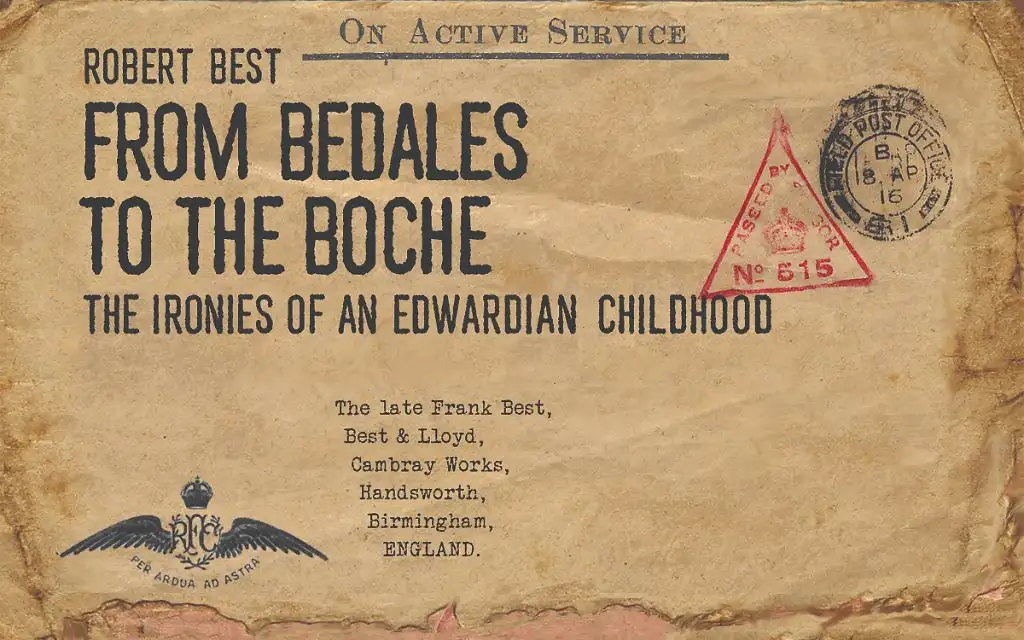
Best’s writing reveals another side of his character. He wrote an appreciation of his father’s industrial methods, Brass Chandelier, as well as a memoir of his childhood and youth, published posthumously by EnvelopeBooks as From Bedales to the Boche: The Ironies of an Edwardian Childhood. His brother Frank had died during the First World War, while Robert survived, an experience that formed part of the background to his later reflections on education, privilege and the society into which he had been born.
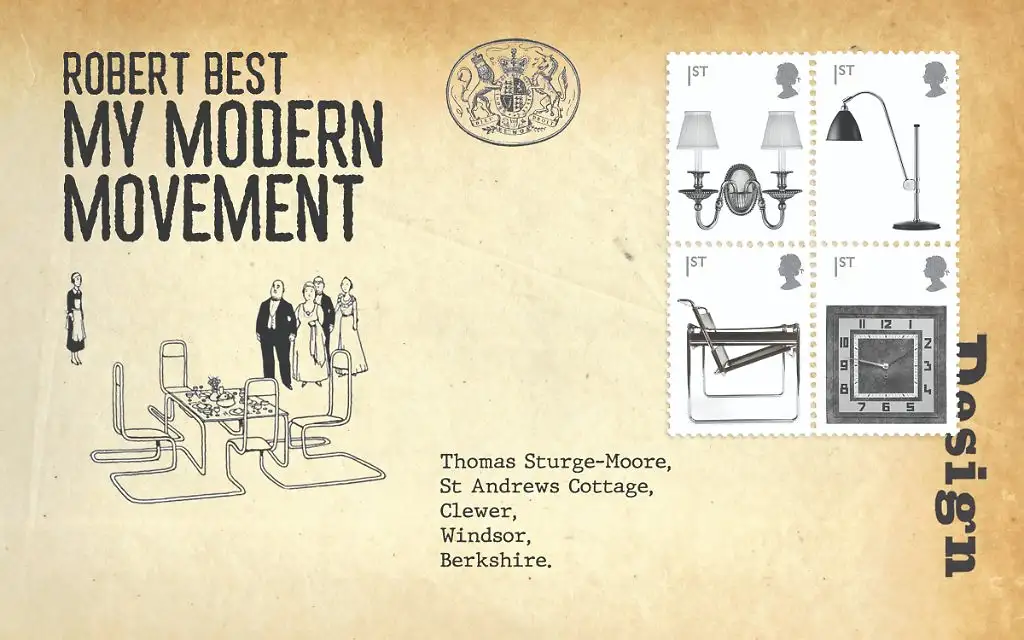
He also wrote a substantial memoir on design culture and the modern movement. Composed in the early 1950s, this too has been posthumously published by EnvelopeBooks under the title, My Modern Movement. The manuscript is significant because Best was not simply an observer of the British design establishment: he had been a participant in the movement and had himself attempted to put its ideals into industrial practice. His memoir consequently provides an insider’s perspective on the tension between modernist idealism and the paternalistic assumptions of the British design establishment and London’s avant garde.
This tension appears to have been central to Best’s thought. He questioned the assumption that a cultivated minority necessarily possessed the right to determine what constituted good design for the mass of the population. His unpublished writing examined the ideals behind institutions such as the Council of Industrial Design, established in 1944, and questioned whether attempts to raise the aesthetic standards of the public could themselves become a form of cultural paternalism.
The paradox surrounding Best’s career. is that he was born into precisely the privileged industrial class that modernist reformers often regarded as responsible for the poor quality of mass-produced goods. Yet he became one of the few British industrialists who attempted to reform industrial production from within while not losing touch with popular aspirations, which he felt the more theoretical campaigners among his contemporaries paid too little attention to.