We use essential cookies to keep this site working — your cart, your accessibility settings, your preferences. We don’t use tracking or advertising cookies. Read our Cookie Policy.

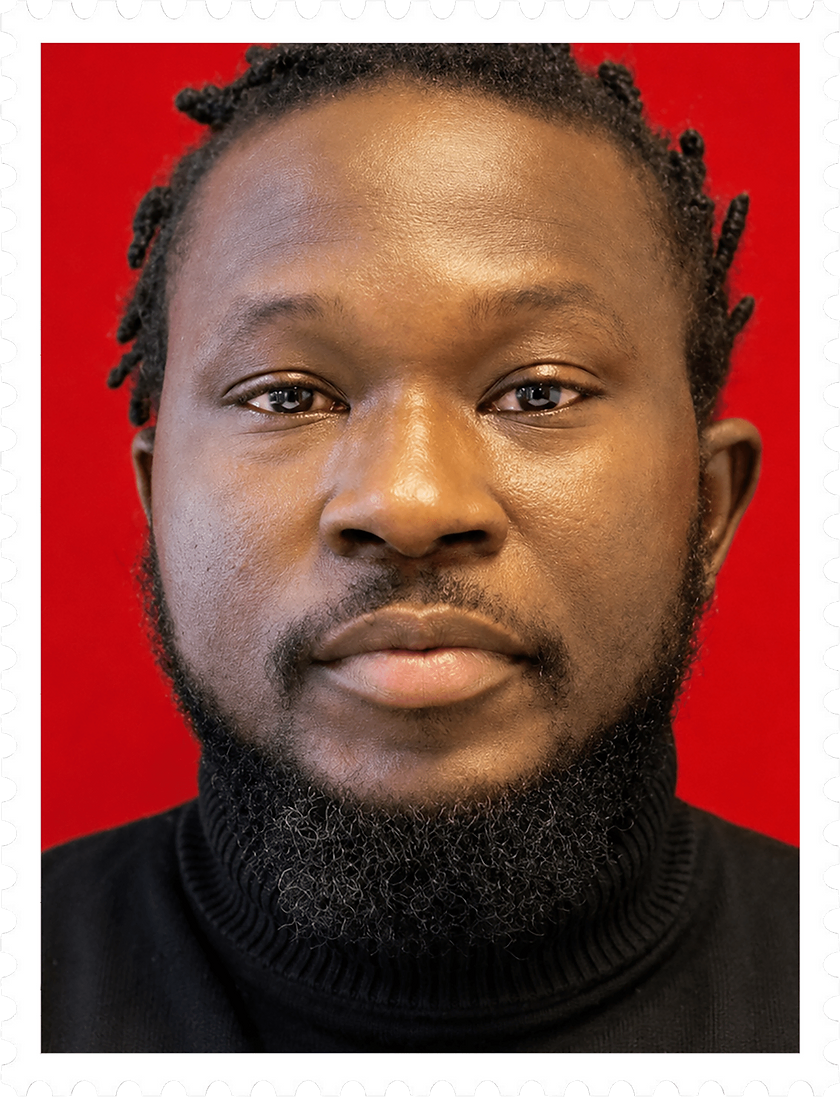

Tunde Ososanya
Born in 1990, Ososanya is a Nigerian broadcast journalist and graduate of the Nigerian Institute of Journalism. He works at the BBC’s West Africa bureau in Lagos, specialising in Pidgin English reporting. His previous roles include television presenter at the Nigerian Television Authority and Senior Editor at Legit.ng. He is also a fellow of the African Academy for Open Source Investigations. His first book, Later Tonight, appeared in 2016.
Background
Tunde Ososanya is a Nigerian journalist, writer and broadcaster whose fiction is closely informed by his experience of contemporary Nigeria, particularly Lagos and the lives of people navigating its economic, social and political pressures. Born in 1990, he studied Mass Communication at the Nigerian Institute of Journalism and began his professional career in television before moving into digital journalism. He has worked as a television presenter for the Nigerian Television Authority, as a senior editor at Legit.ng, and as a contributing writer for Opera News. He subsequently joined the BBC’s West Africa bureau in Lagos, where he specialises in reporting in Nigerian Pidgin. He is also a fellow of the African Academy for Open Source Investigations.
Ososanya’s journalistic career relates to his fiction because it has given him an unusually close view of ordinary Nigerian life rather than the lives of the country’s political or economic elite. His writing is interested in people trying to make their way through circumstances that are unstable, unequal and frequently absurd. His first book, Later Tonight: A Collection of Short Stories, appeared in 2016.
His background in Nigerian Pidgin broadcasting gives the writing an additional dimension. Ososanya works professionally in both English and Pidgin, and his fiction draws upon the rhythms, idioms and comic possibilities of Nigerian speech. This is particularly valuable in dialogue, where the language can convey social position and personality without requiring lengthy explanation. His journalism has evidently also encouraged a compact, observant approach to character and incident.
There is a wider Nigerian literary tradition behind this kind of writing, but Ososanya’s position is somewhat different from that of the internationally established Nigerian novelists. He is a journalist writing fiction from inside the contemporary urban culture he describes, rather than a novelist reconstructing Nigeria principally through historical memory or an expatriate perspective. His Lagos is recognisably modern: its characters encounter social media, popular culture, political patronage, religious belief, commercial opportunism and the informal economy alongside much older patterns of family and community life.
The stories also extend beyond Lagos. In Lagos, Life and Sexual Distraction, two narratives concern northern Nigeria and the violence associated with Boko Haram. This widens the collection’s geographical and political scope and establishes a contrast between the pressures of Lagosian urban life and the much more immediate threat of insurgency in parts of the north.
Ososanya belongs to a younger generation of Nigerian writers whose professional lives are inseparable from the rapidly changing media environment of contemporary Africa. His experience encompasses television, online journalism, investigative methods, social media and Pidgin broadcasting as well as fiction.
That combination makes Ososanya an interesting writer in his own right. His fiction is grounded neither in nostalgia for an earlier Nigeria nor in an outsider’s attempt to explain the country to Western readers. It is observational, contemporary and rooted in the ordinary business of survival. The attraction of Lagos, Life and Sexual Distraction lies less in grand literary claims than in the access it provides to a particular Nigerian sensibility: resourceful, sceptical, humorous and accustomed to finding ways of living amid circumstances that are often difficult and occasionally extraordinary.