We use essential cookies to keep this site working — your cart, your accessibility settings, your preferences. We don’t use tracking or advertising cookies. Read our Cookie Policy.



Jane Reid
Educated at Lady Margaret Hall, Oxford, Jane Reid (née Harwood) read English, going up in 1951 and taking her degree in 1954, the same year she was runner-up in the Vogue Talent Competition.
She later took a further degree, with distinction, from the University of Cape Town in 1982.
Background
In 1956 she married Sir Harold Martin Smith Reid, KBE, CMG, a career British diplomat, and the couple went on to have four children—one son and three daughters. Over the following decades Jane accompanied Martin on postings to Burma, Guyana, Romania, Malawi, South Africa and Jamaica, a pattern of life that echoed her own childhood, much of which had been spent following her parents’ postings abroad, including pre-war winters in Sudan and years at boarding school in Somerset.
Alongside this life of postings, she worked as a journalist and as a teacher, in London comprehensive schools and later at the universities of Malawi and Cape Town, the latter position taken up during Martin’s posting to South Africa under apartheid, when the University of Cape Town’s reputation as a centre of opposition to the regime made her appointment there a quietly pointed act.
It was in Bucharest, where Martin served at the British Embassy from 1968 to 1970, that the Reids met the Romanian artist George Tomaziu. Tomaziu had worked for MI6 during the Second World War monitoring German troop movements and had paid for it under Romania’s post-war Communist government with some thirteen years’ imprisonment. Jane and Martin befriended him after his release, and in 1969 the British Embassy succeeded in securing exit visas for Tomaziu and his family, who settled first in London and then in Paris.
It was Jane who encouraged Tomaziu to set down his story, which he wrote in French in Paris, over more than a decade, under the working title Figurant d’Epoque. He died in 1990 without having found a publisher for it. Jane then took on the task of bringing it into English herself, and her translation was published in 2015 as The Witness: Memoir of an Artist and Spy for MI6 during World War Two, launched at the Romanian Cultural Institute in London. A further edition, retitled Artist Spy Prisoner: My Life in Romania Under Fascist and Communist Rule, was published by EnvelopeBooks in 2024.
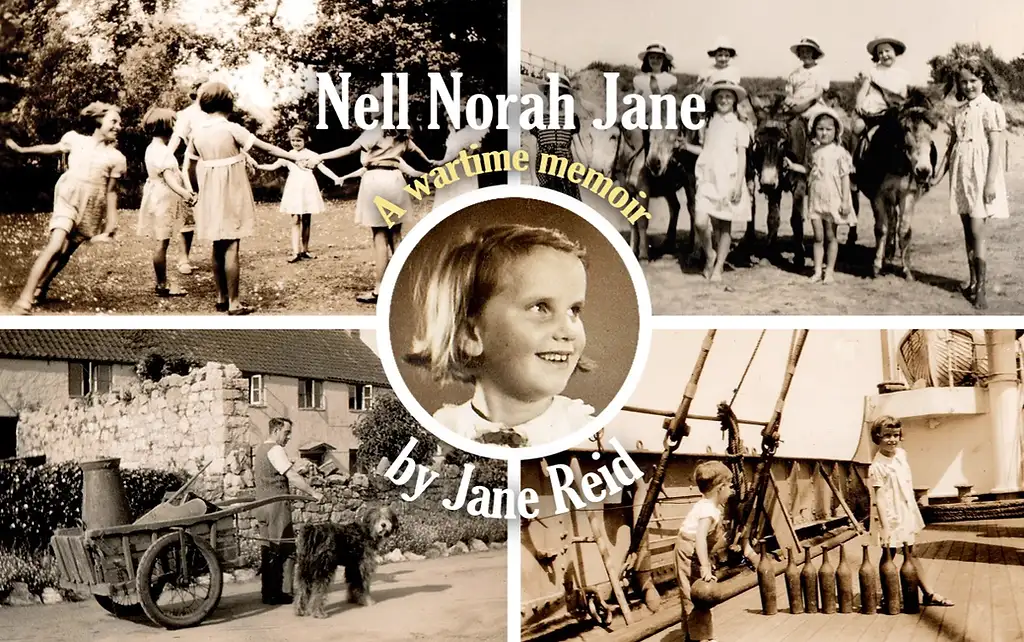
Jane has also written her own account of her early life, Nell Norah Jane: A Wartime Memoir(PostcardBooks, 2021), recalling her grandparents’ houses in the Birmingham suburbs, pre-war Sudan and seven years at school in Burnham-on-Sea, Somerset.
In later life she has been involved for twenty years in charity administration, including work for the Wingate Scholarships and the Abbey Rome Awards, and has served as a trustee of the medical charity Wytham Hall.