We use essential cookies to keep this site working — your cart, your accessibility settings, your preferences. We don’t use tracking or advertising cookies. Read our Cookie Policy.

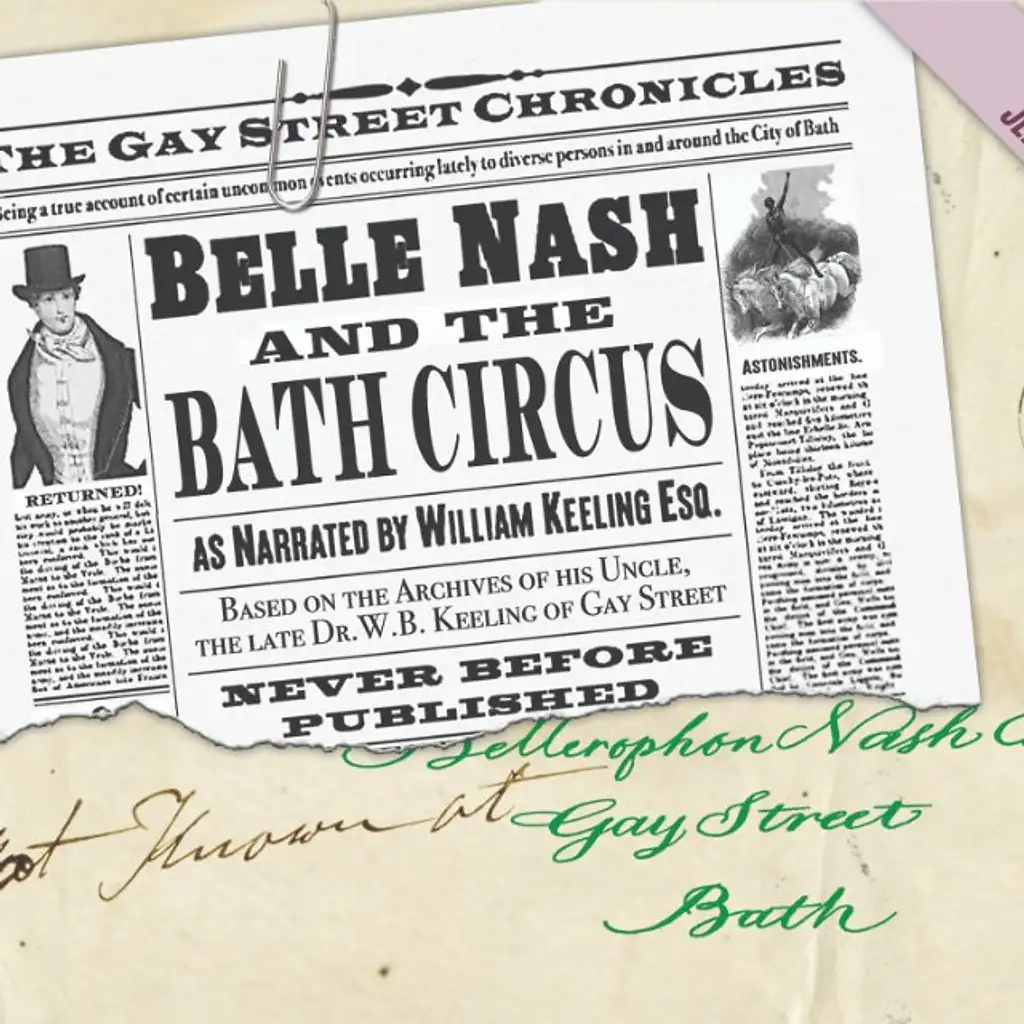
Belle Nash and the Bath Circus
William Keeling
- Publication date
- 1 Nov. 2024
- Print length
- 320 pages
- Paperback ISBN-13
- 9781915023117
- Dimensions
- 203 × 127 mm
- GoodReads
- Customer reviews
Belle Nash and the Bath Circus
About the book
An hilarious caper through Regency Bath - wherein justice and bigotry collide with a bump Following on from Belle Nash and the Bath Soufflé, this second adventure in The Gay Street Chronicles sees our hero return to Bath overcome by love and confusion, only to learn how great is the suffering of others. At the end of his last adventure, Belle was banished for four years to the island of Grenada. It is now 1835, and he is back in the city he grew up in and adores, but misses the love he left behind in the Caribbean. His heartache leads to personal mishaps when he meets Pablo Fanque, the Black equestrian acrobat from Norfolk who longs to set up his own circus. As a well-loved figure in Bath, Belle uses his influence to try and help, but has to run the gauntlet of Lord Servitude, the most hated man in England and a die-hard supporter of slavery. As ever, William Keeling’s whimsical tale brings Belle, his gay hero, into a situation where comedy does not obscure stark moral issues of prejudice and bigotry that are as alive today as they were in Regency times.
William Keeling’s second novel, Belle Nash and the Bath Circus, develops his Gay Street Chronicles series considerably. Set in 1835, it begins with Belle’s return to Bath after four years of enforced exile in Grenada. His experience of slavery in the Caribbean has changed his political consciousness. In Bath he encounters Pablo Fanque, the Black equestrian performer who historically became Britain’s first Black circus proprietor, and attempts to assist him in establishing a circus. Their efforts bring them into conflict with Lord Servitude, a committed defender of slavery.
The second book therefore retains the comic machinery of the first while giving the series a more explicit moral dimension. Slavery, racism, prejudice and personal integrity become central concerns. Keeling uses the conventions of the comic historical novel to approach subjects that could otherwise make for a much heavier narrative. The result is intended to be entertaining without allowing the entertainment to neutralise the underlying historical injustice.
Keeling has acknowledged that Belle Nash is, to some degree, a version of himself, although he says that his favourite character is Miss Prim, a melancholy spinster whose knitting serves as an unsuccessful distraction from her emotional troubles. His account of the writing process is revealing: he describes the novels as developing through a fairly intense editorial relationship with Stephen Games at EnvelopeBooks, and says that the process can be demanding but ultimately improves the books.
William Keeling
About the author